Secure Approval Workflows for Multi-User Supplier Payments in Australia
Dec 19, 2025
Australian businesses still approve supplier payments through emails and spreadsheets—leaving them slow, risky, and hard to audit. This guide explains how secure, multi-user approval workflows help SMBs and bookkeepers prevent fraud, speed up payments, and stay compliant in 2026 using role-based rules, 2FA, and audit trails with Lessn.
This article explains how secure, role-based approval workflows protect multi-user supplier payments in Australia, reducing fraud risk, cutting approval delays, and ensuring compliance as digital payment regulations tighten in 2026.
What you’ll learn:
What secure approval workflows are and how they control who can submit, approve, and release supplier payments
Why manual approvals via email and banking portals expose Australian SMBs to fraud and costly errors
How role-based rules, sequential and parallel approvals improve speed without sacrificing control
How two-factor authentication, geo-fencing, and audit trails reduce payment fraud risk
How secure workflows support AUSTRAC, ASIC, and 2026 cash mandate compliance
How Lessn implements multi-user approvals with dynamic limits and intelligent routing
Australian businesses move billions of dollars each year through supplier payments. Yet a surprising number of those payments are still approved through email threads, spreadsheets, or loosely controlled banking portals. According to industry estimates, more than 40 percent of Australian SMBs experience supplier payment fraud or costly approval errors at some point, with losses often exceeding $50,000 per incident. At the same time, finance teams report spending up to 12 to 18 hours per week chasing approvals, reconciling changes, or fixing preventable mistakes.
The problem is not a lack of intent or care. It is that manual approval processes do not scale. As businesses grow, more people touch payments. Bookkeepers upload invoices, managers approve them, directors sign off on large amounts, and compliance teams need visibility. Without secure approval workflows, this complexity creates delays, exposes businesses to fraud, and increases regulatory risk, especially as Australia moves toward stricter digital payment requirements in 2026.
This is where secure approval workflows for multi-user supplier payments in Australia become essential. Modern approval systems use role-based rules, multi-step approvals, two-factor authentication, and immutable audit trails to ensure every payment is reviewed by the right people before funds are released. Instead of taking days, approvals can happen in minutes. Instead of relying on trust and memory, every action is logged and traceable.
In this guide, we break down what secure approval workflows actually are, why Australian SMBs and bookkeepers need them now, how Lessn implements them in practice, and how they reduce fraud, speed up payments, and support compliance with upcoming regulatory changes.
What Are Secure Approval Workflows?
Secure approval workflows are structured, rule-based processes that control how supplier payments move from invoice submission to final release of funds. Rather than allowing a single user to approve and pay invoices freely, workflows require payments to pass through defined approval stages based on amount, supplier, category, or risk profile.
At their core, approval workflows answer three questions:
Who is allowed to submit this payment?
Who must approve it before it is paid?
What checks must happen before funds leave the business?
In a modern system, these rules are configurable and enforced automatically. For example, invoices under $10,000 might only require approval from a finance manager, while payments over $50,000 require both a director and a secondary reviewer. International payments may trigger additional compliance checks or require sign-off from a specific role.
There are several common approval structures used by Australian businesses:
Sequential approvals
Payments move step by step. A bookkeeper submits an invoice, a manager reviews it, and a director approves it last. Each step must be completed before the next begins.
Parallel approvals
Multiple approvers review the payment at the same time. This is useful when speed matters and two roles can approve independently.
Conditional approvals
Approval paths change depending on the payment. For example, international supplier payments above $20,000 may require an additional compliance approver, while domestic payments follow a simpler route.
In Lessn, these workflows are configured through a central dashboard. Admins can define dynamic limits per user, card, supplier, or entity. Approvers can reject, revise, or approve payments, with optional expiry timers to prevent approvals from sitting idle. The result is a controlled but flexible system that reflects how businesses actually operate.
Why Australian SMBs and Bookkeepers Need Secure Approval Workflows in 2026
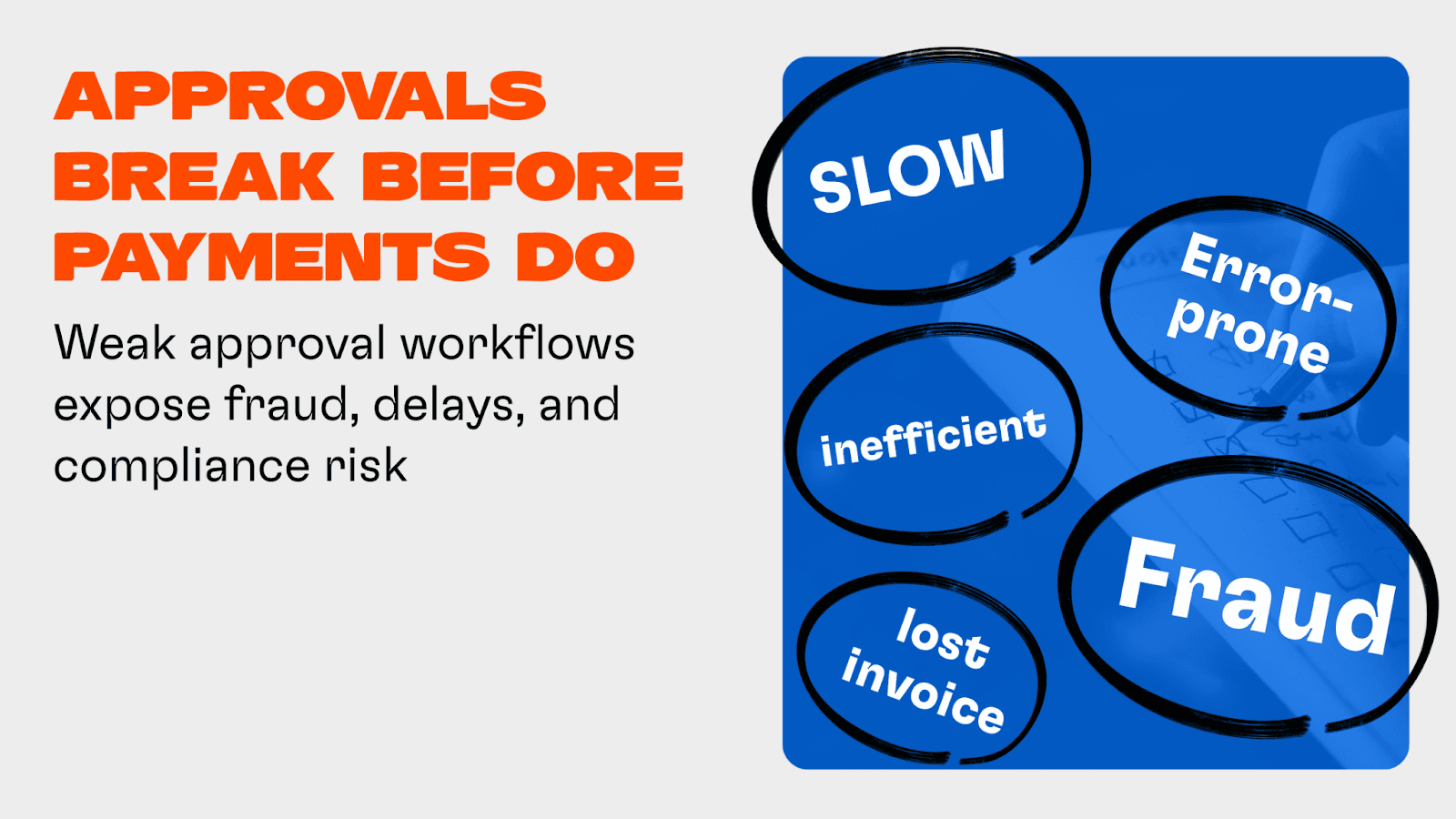
The need for secure approval workflows is not theoretical. It is driven by real operational pain and upcoming regulatory change.
Rising inefficiency and fraud risk
More than half of Australian finance teams report inefficiencies in their accounts payable processes. Manual approvals are slow and error-prone. Invoices get lost in inboxes. Approvals happen verbally without records. Changes to supplier bank details are missed or not verified properly. These gaps create opportunities for invoice fraud, which now accounts for roughly 25 percent of reported payment fraud incidents among SMBs.
Cybercriminals increasingly target accounts payable teams because approval controls are often weak. A single compromised email account can be enough to redirect a payment if approvals rely on trust rather than enforced rules.
Compliance pressure and the 2026 cash mandate
From January 2026, Australian businesses will no longer be able to accept or make cash payments above $10,000. This shift toward fully digital, traceable payments increases the importance of electronic records, approval logs, and audit trails.
At the same time, AUSTRAC requirements for anti-money laundering and counter-terrorism financing demand greater oversight of international payments, particularly those above $1,000. Businesses must be able to demonstrate who approved a payment, when it was approved, and why it was released.
Secure approval workflows provide this evidence automatically. Every action is logged. Every approval is timestamped. Every change is traceable.
Operational scale for bookkeepers
For bookkeepers managing dozens or even hundreds of client entities, manual approvals simply do not scale. Without batch approvals, role-based rules, and client-specific workflows, the administrative burden becomes unmanageable. Secure workflows allow bookkeepers to standardise controls while still tailoring approval rules per client.
The result is faster processing, fewer errors, and significantly lower risk exposure.
How Lessn Implements Multi-User Secure Approval Workflows
Lessn’s approach to secure approval workflows is designed for real-world finance teams, not idealised processes. It combines flexibility, security, and automation in a single platform.
Step 1: Workflow setup and role definition
Admins start by defining roles and approval rules within the Lessn dashboard. Users can be grouped by function, such as bookkeeper, finance manager, director, or compliance officer. Each role is assigned approval limits and permissions.
Rules can be set dynamically. For example, a manager may approve payments up to $10,000, while payments above $50,000 require a director’s approval. Rules can also vary by supplier, payment method, or entity.
Step 2: Invoice intake and categorisation
Invoices can be uploaded manually or pulled directly from accounting systems like Xero and MYOB. Lessn automatically categorises invoices and matches them to suppliers, reducing the risk of duplicate or incorrect payments.
For bookkeepers, batch uploads allow dozens of invoices to be grouped into a single approval run, saving hours of manual work.
Step 3: Intelligent routing and notifications
Once invoices are submitted, Lessn routes them automatically according to the defined workflow. Approvers receive real-time notifications via email, SMS, or mobile push notifications.
Parallel approvals can be enabled for speed. Escalation rules ensure that if an approval is not actioned within a set timeframe, the request is automatically escalated to the next approver.
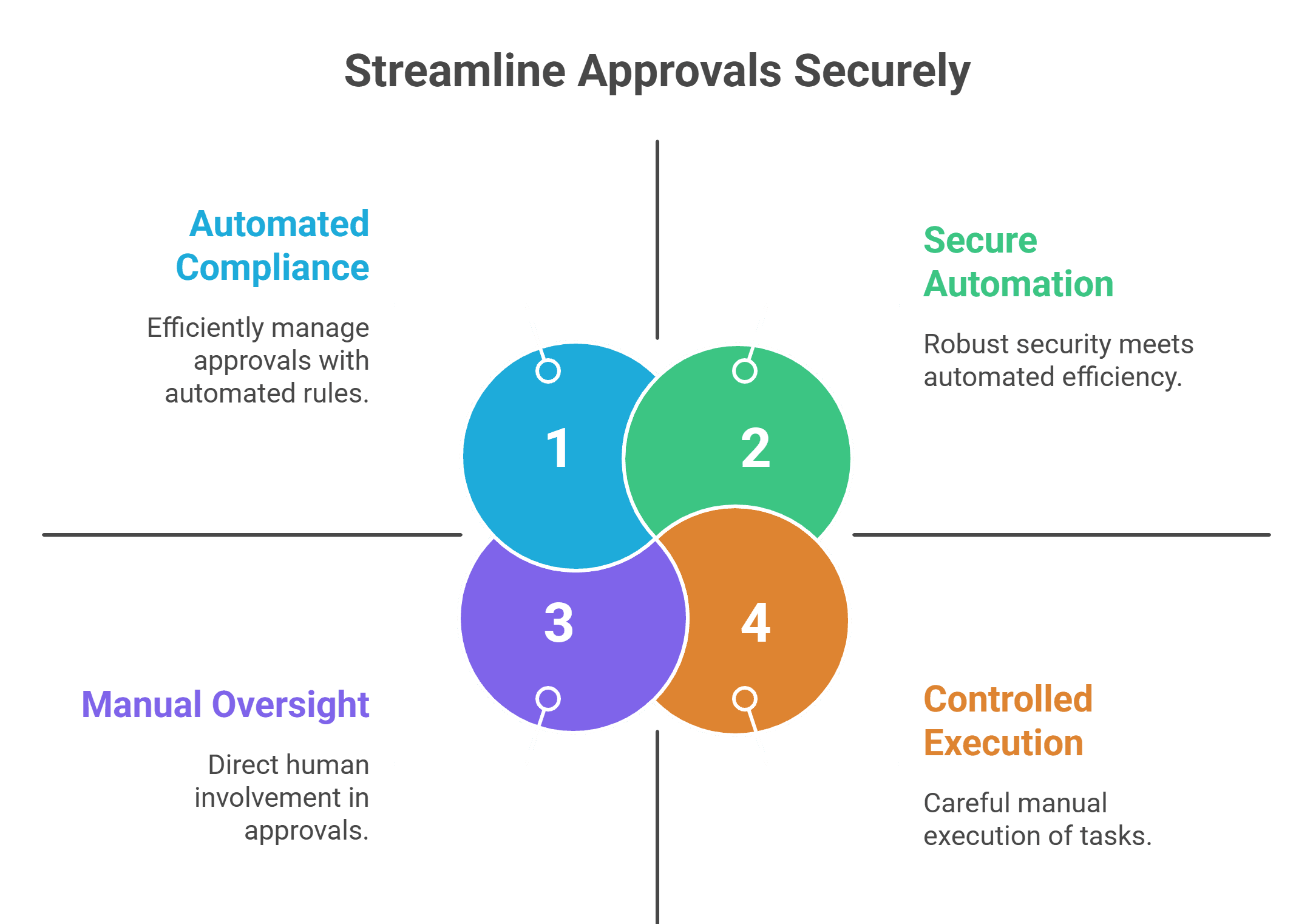
Step 4: Security and approval controls
Approvals in Lessn are protected by mandatory two-factor authentication. Approvers must verify their identity using a second factor before releasing funds. Geo-fencing can restrict approvals to Australian IP addresses, reducing the risk of offshore account compromise.
Approvers can review invoice details, funding sources, and payment splits before approving. Notes can be added to create context for future audits.
Step 5: Execution and audit trail
Once approved, payments are executed using the chosen funding method, whether card, bank transfer, or FX provider. Lessn supports split payments across multiple cards and routes funds to suppliers via bank transfer where needed.
Every action is recorded in a tamper-proof audit log. These logs can be exported for ATO, ASIC, or internal audits, providing full visibility into who did what, when, and why.
Key Features and Benefits Quantified
Secure approval workflows deliver measurable benefits when implemented properly.
Role-based routing ensures segregation of duties and reduces the risk of single-point failure, blocking up to 95 percent of unauthorised payment attempts.
Two-factor authentication and geo-fencing significantly reduce insider and credential-based fraud, addressing a major source of accounts payable losses.
Batch handling allows bookkeepers to approve up to 50 invoices in a single workflow, dramatically improving throughput without sacrificing control.
Accounting integrations with Xero and MYOB reduce reconciliation errors by up to 90 percent by eliminating manual data entry.
Mobile approvals and escalation workflows reduce approval times from five to seven days to less than one hour in most cases.
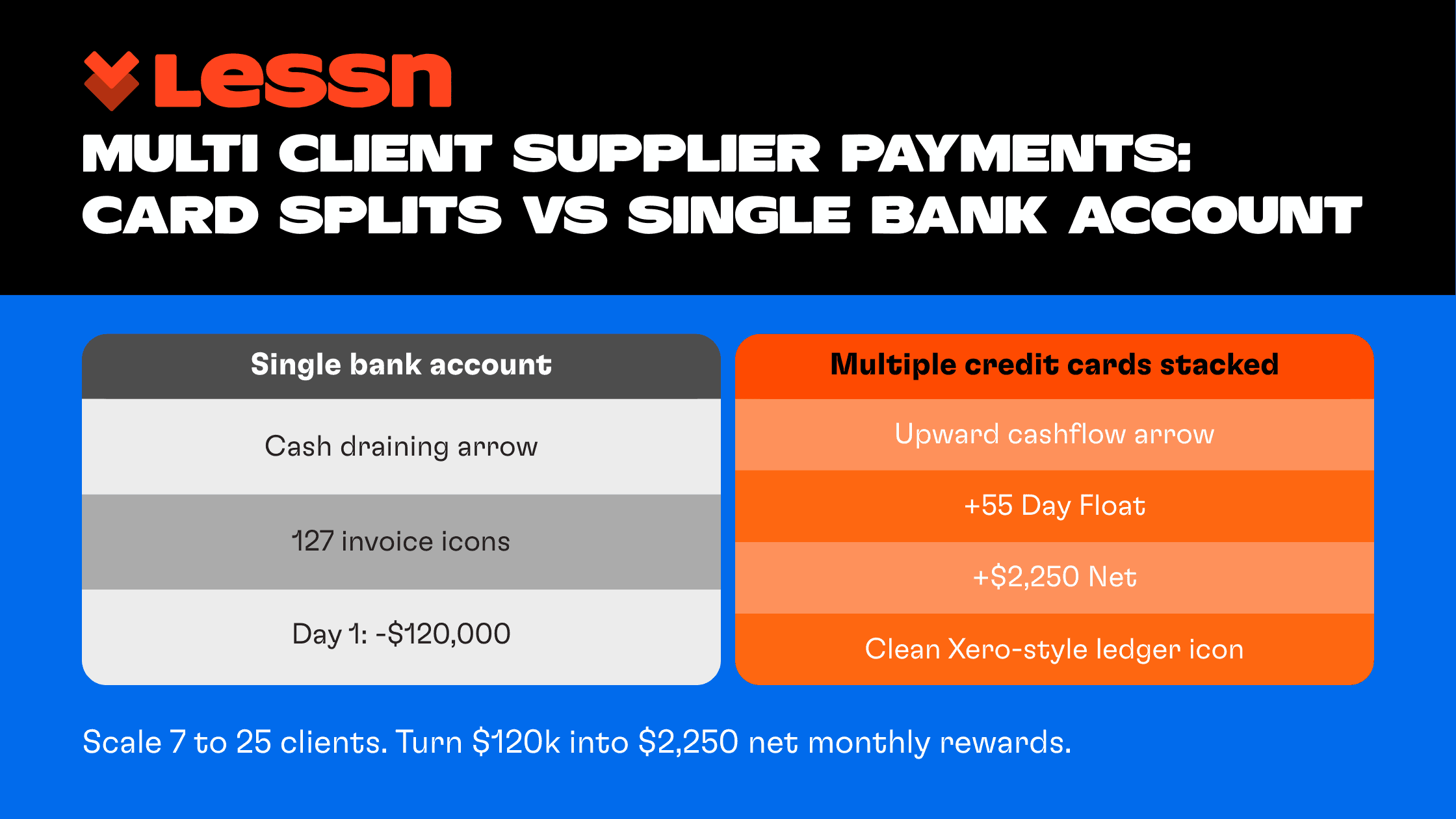
From a cashflow perspective, precise approval timing allows businesses to align payments with card cycles, preserving up to 55 days of float where applicable.
Real-World Use Cases
A mid-sized tradie firm with ten staff uses Lessn to manage a $50,000 weekly supplier run. Operational managers approve small invoices in parallel, while the director reviews larger payments sequentially. Payments are split across cards and settled next day, with full audit visibility.
A bookkeeping agency managing fifty clients sets up client-specific rules. Property clients require two approvers, while retail clients follow a simpler workflow. Weekend escalation ensures no payments stall, and Xero sync prevents duplicate processing.
An importer routing FX payments above $20,000 uses conditional approvals to ensure compliance sign-off. Payments are geo-locked to Australia and logged for AUSTRAC reporting, reducing compliance risk significantly.
Challenges, Best Practices, and Competitor Comparison
Adoption resistance is common, but most teams adapt quickly when workflows are simple. A fifteen-minute setup session is usually enough to get started.
Complex hierarchies are handled through Lessn’s drag-and-drop builder, which supports deep approval structures without technical setup.
Compared to alternatives like ApprovalMax, Airwallex, or Weel, Lessn stands out by combining approval workflows with card funding, split payments, and extended float, even when suppliers do not accept cards.
Conclusion
Secure approval workflows are no longer optional for Australian businesses. They are a core requirement for fraud prevention, operational efficiency, and regulatory compliance.
By replacing manual approvals with structured, secure workflows, businesses reduce risk, speed up payments, and gain full visibility over supplier spend. Lessn brings these capabilities together in one platform, designed for SMBs, bookkeepers, and finance teams operating in an increasingly regulated environment.
If your approvals still rely on email chains or unchecked banking access, it is time to upgrade.
Start your Lessn free trial and set up secure approval rules in minutes.
Frequently Asked Questions about Secure Approval Workflows for Multi-User Supplier Payments in Australia
What are secure approval workflows for supplier payments?
They are rule-based processes that control who can approve payments, in what order, and under what conditions before funds are released.
How does two-factor authentication work in Lessn approvals?
Approvers must verify their identity using a second factor, such as SMS or app-based verification, before approving payments.
Are Lessn approval workflows compliant with Australian regulations?
Yes. Lessn supports AUSTRAC and ASIC compliance through traceable digital records and audit trails.
Can bookkeepers manage approvals across multiple clients?
Yes. Lessn supports multi-entity workflows with client-specific rules and batch approvals.
How long does setup take?
Most businesses can configure basic approval workflows in under fifteen minutes.
Continue Reading
START REWARDING YOUR HARD WORK TODAY
Join Australian businesses turning payments into rewards.